


Description
“Subtask” is a media artwork that visually marks parts of websites that rely on crowd labor or data-labeling work and use cloud labor sites like Amazon Mechanical Turk, Appen or Scale A.I. and others to create the site. The project overlays data such as pay rates, testimonials, and ethical ratings from public datasets and activist sources related to each website that it is asked to check. The goal of the project is to critically examine how the Internet is largely built by underpaid laborers and how the web exists as another form of control to get large online presences built.
Download the Extension from The Website: http://subtask.coin-operated.com
System
“Subtask”exists as an extension to the popular browser, Google Chrome, and will allow anyone to install it and search for invisible forms of labor across any website that is being viewed. It works by crawling crowd and A.I. worker sites like Appen, Mechanical Turk, and Scale A.I. for user testimonials about how much was paid workers to complete menial tasks such as labeling images, resizing design elements, and adding statistical data to documents. Once installed, the extebsion will place “green” flags next to content that was created by online “clickworkers” and a testimonial of their activity on the site.
Project Images
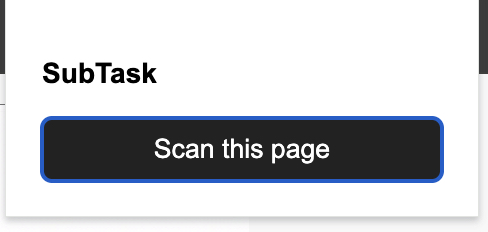
A button appears on the top of the page asking users to “Scan This Page” for invisible labor marks.
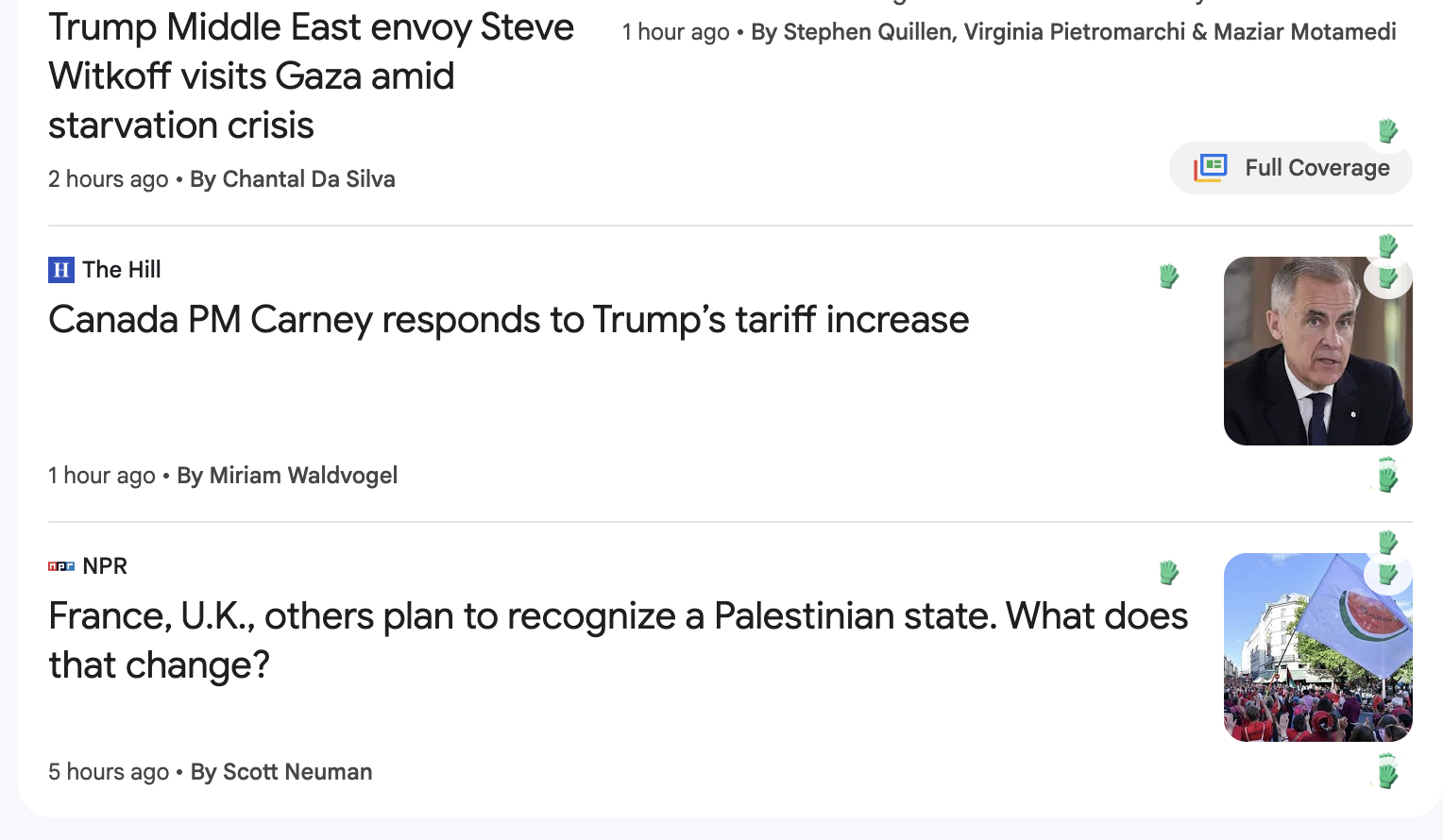
Once “labor” is found, icons of green hands show up next to the points where the labor occurred.
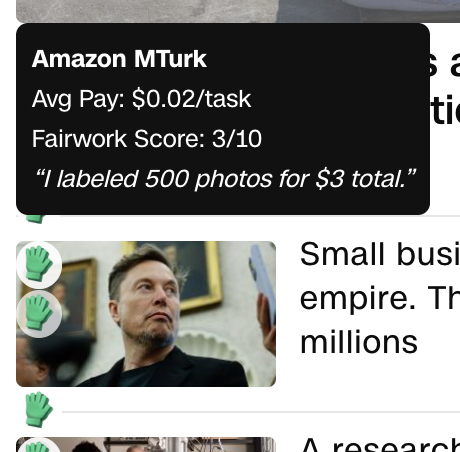
Putting the cursor over a hand icon reveals a quote from a worker that shows how much they earned for the work that was done.
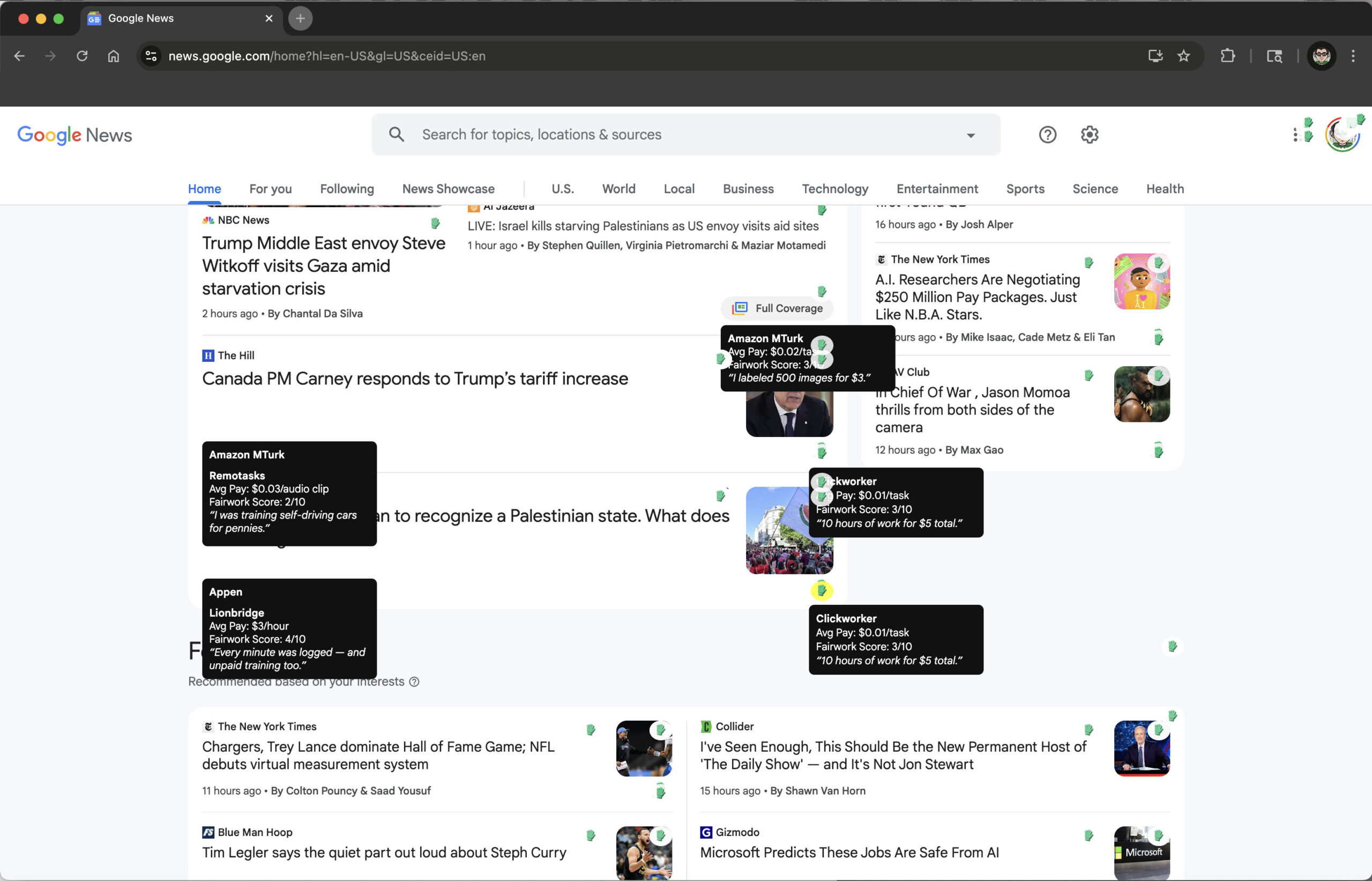
By clicking on all of the icons, you can reveal all of the work that was done one one specific page. The above photo shows work done on Google News.
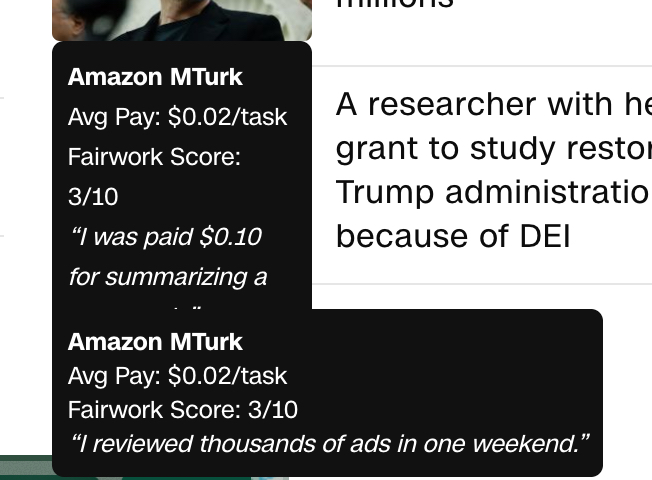
A closer look at the quotes shows the Fairwork Score for the task done. Fairwork assesses platforms against five principles of fair work: Fair Pay, Fair Conditions, Fair Contracts, Fair Management, and Fair Representation. Each principle is further divided into two thresholds, with a maximum possible score of ten points.
