


Description
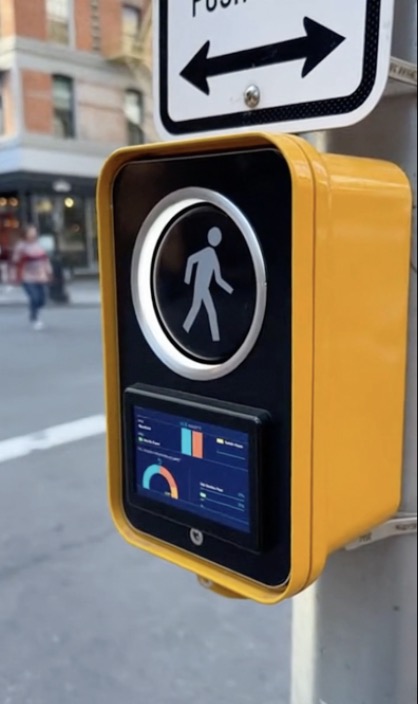
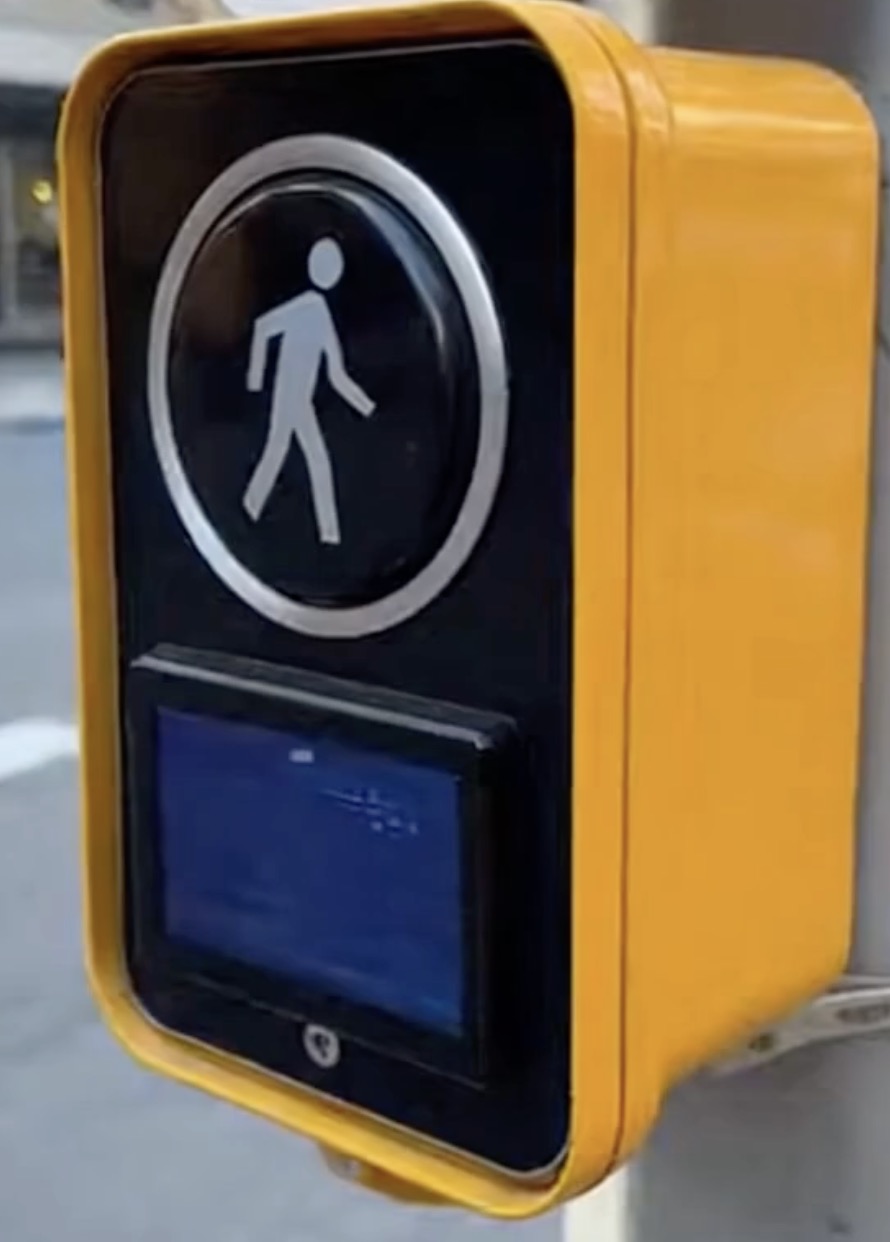
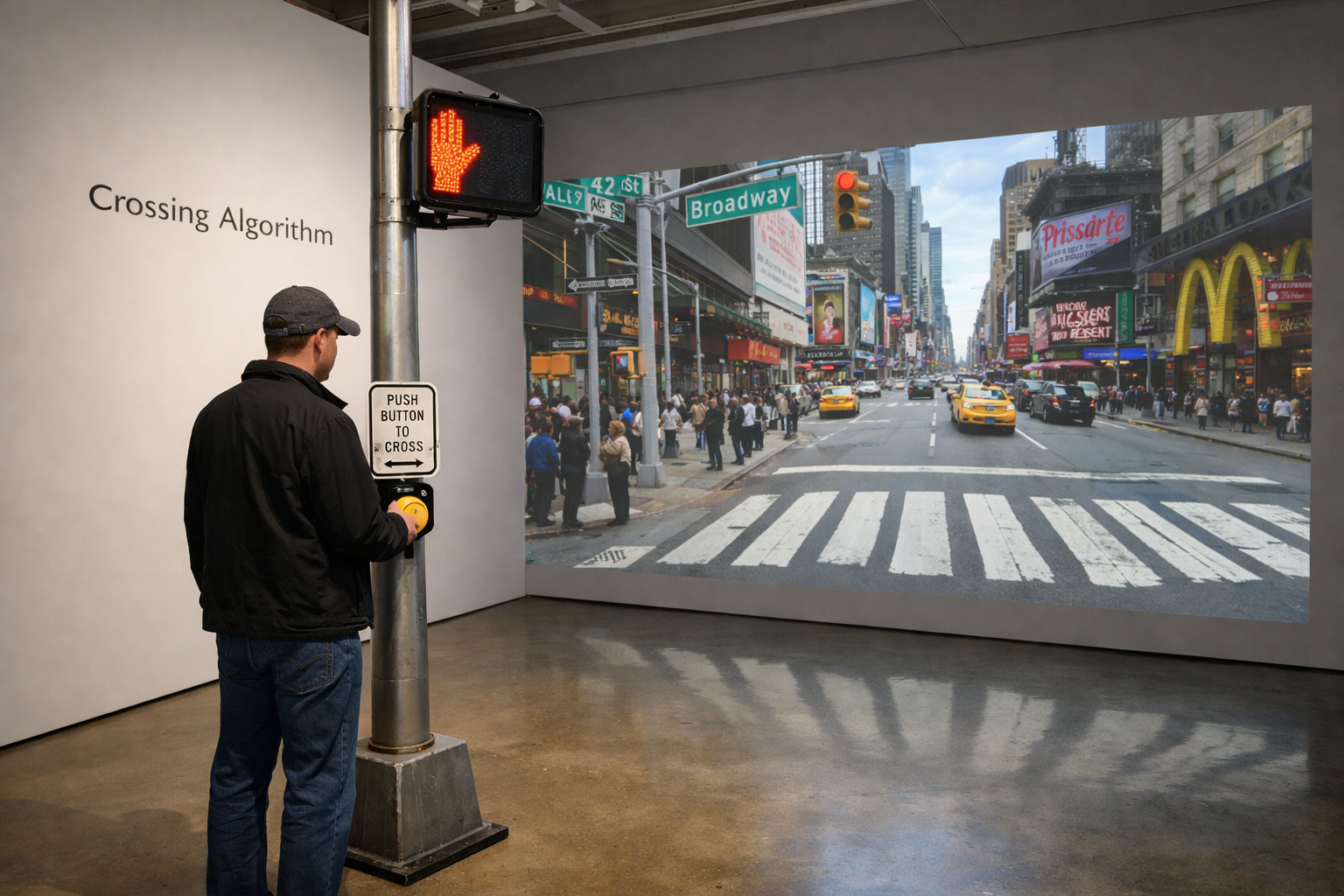
Crossing Algorithm is a hardware-based urban intervention that encodes a city’s history of pedestrian injury and questionable urban development practices directly into the act of crossing the street. For instance, at an intersection, the pedestrian waiting time is algorithmically extended based on the number of recorded pedestrian injuries that have occurred at that location, using publicly available New York City crash data. Rather than attempting to optimize pedestrian flow or improve safety through prediction or enforcement, the project deliberately refuses remediation. It does not seek to correct danger, but to remember it. The system treats injury not as an anomaly to be engineered away, but as a cumulative condition embedded in the city’s infrastructure. The button also knows the history of it’s surroundings, informing crossers that the neighborhood exists in a formerly redlined district.
Importantly, the project does not control real traffic signals or intervene in actual safety systems. It exists as a parallel, critical layer, an interpretive device that shadows existing infrastructure rather than improving it. In doing so, it challenges the assumption that civic technologies must always propose solutions. Instead, it insists on friction, discomfort, and temporal drag as legitimate forms of public engagement.
Crossing Algorithm asks a simple but uncomfortable question:
If the city already knows where harm occurs, why does that knowledge so rarely translate into accountability? And what happens when that knowledge is no longer buried in open data portals, but embedded directly into the rhythms of everyday movements such as crosswalks?
System
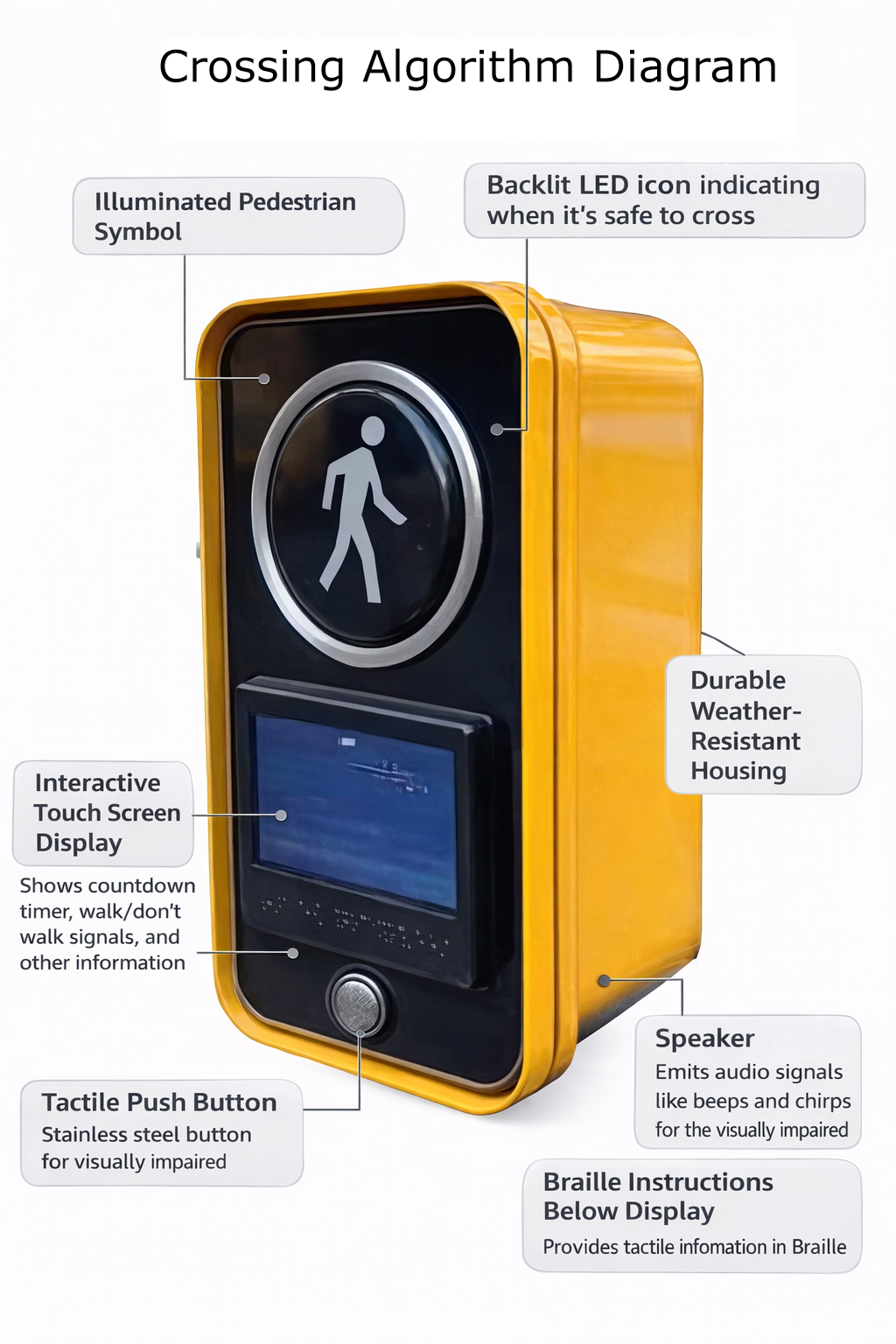
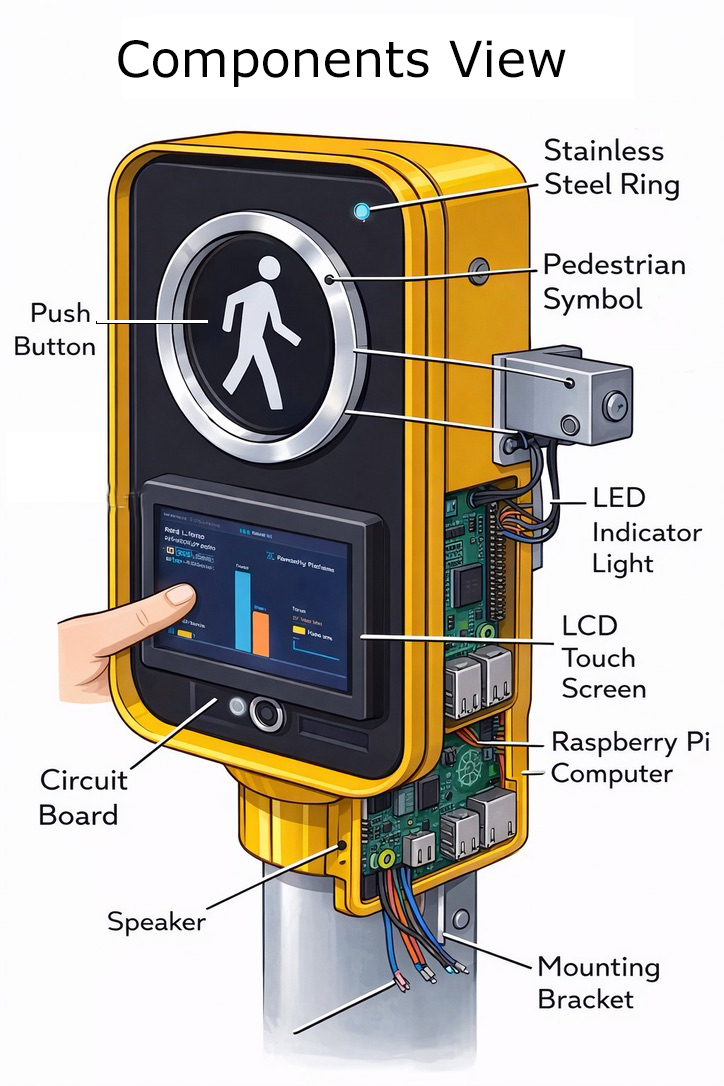
When a pedestrian presses the crosswalk button, they are confronted with the quantified history of harm at that intersection. The more people who have been injured there in the past, the longer the pedestrian is required to wait. Delay becomes a form of archival pressure. Time itself functions as a ledger of violence. This project positions waiting as a critical interface. In contemporary “smart city” discourse, delay is framed as failure or something to be eliminated through efficiency, automation, and behavioral nudging. Crossing Algorithm inverts this logic by making delay unavoidable, uneven, and politically situated. It forces pedestrians to bodily experience the uneven distribution of risk that urban planning already enacts, but typically conceals within statistical reports and policy dashboards. By externalizing the memory of injury onto a physical interface, the project exposes how cities manage harm through abstraction. Vision Zero initiatives promise safety through data, yet continue to allow certain intersections, neighborhoods, and bodies to absorb disproportionate risk. This system does not claim neutrality. It makes explicit that infrastructure remembers, even when governance prefers to forget.
Installation View
Video
